Our History: A Landmark of Iowa City
From Slezak National Hall to Holub Apartments
The building now known as Holub Apartments (primarily at 302–316 E. Bloomington Street and adjacent addresses like 308 N. Linn Street in Iowa City’s Northside neighborhood) stands as one of the city’s oldest and most significant commercial-residential landmarks. Constructed in 1875, it embodies layers of immigrant heritage, community life, commerce, and adaptation that mirror Iowa City’s own evolution. Today, under new ownership and undergoing major reconstruction, it continues its legacy as a vibrant downtown hub while honoring its historic roots.
1870s Origins: Slezak National Hall and Bohemian Roots
The story begins with Johann (John) Slezak (1812–1876) and his wife, Anna Sichrova Slezak (1822–1905), immigrants from Přívrat, Bohemia (now part of the Czech Republic). They arrived in Iowa around 1855 and settled in the area. In 1872, Johann purchased Lots 5 and 6 in Block 57. By 1875, his son Joseph (Josef) Slezak (1847–1912) completed the original two-story brick building (approximately 40′ x 80′) at the corner of Bloomington and Linn Streets.
- First floor: Dry goods/grocery store and tavern/saloon.
- Second floor: Large meeting hall known as Slezak’s National Hall or Národní Síň (Czech for “National Hall”).
This hall quickly became a cultural and social center for Iowa City’s growing Bohemian (Czech) immigrant community, which made up a significant portion of the local population in the late 19th century. It hosted meetings for fraternal organizations like Trasti, Zastit, Slovanska Lipa, Forum Palacky, and Iowa City Lodge #180 of ZCBJ. Events included dances, parties, sporting activities (e.g., basketball), staged entertainments, and community gatherings. In 1876, it served as a polling place and hosted part of the city’s July 4th centennial celebrations.
Over the following decade, the Slezak family expanded the complex on the property into a true commercial hub:
- A three-story brick addition for a farmers hotel with sleeping rooms and a Bohemian restaurant (noted for affordable 25-cent meals with free beer).
- A carriage house (with laundry room and hoist).
- A stable for horses and wagons.
This setup catered to Johnson County farmers visiting town for trade, as well as hospital visitors (near early medical facilities). The property reflected Italianate commercial architecture with features like round-arched windows and bracketed cornices.
Early 20th Century: Holub Family Stewardship and Transition
The property remained in the extended Slezak family for generations (six generations total). Joseph Slezak’s daughter Anna (1872–1963) married Joseph F. Holub (1867–1934) in 1892, shifting much of the operation to the Holub side (Holub & Son). Their son William J. Holub (1892–1975) continued the family business.
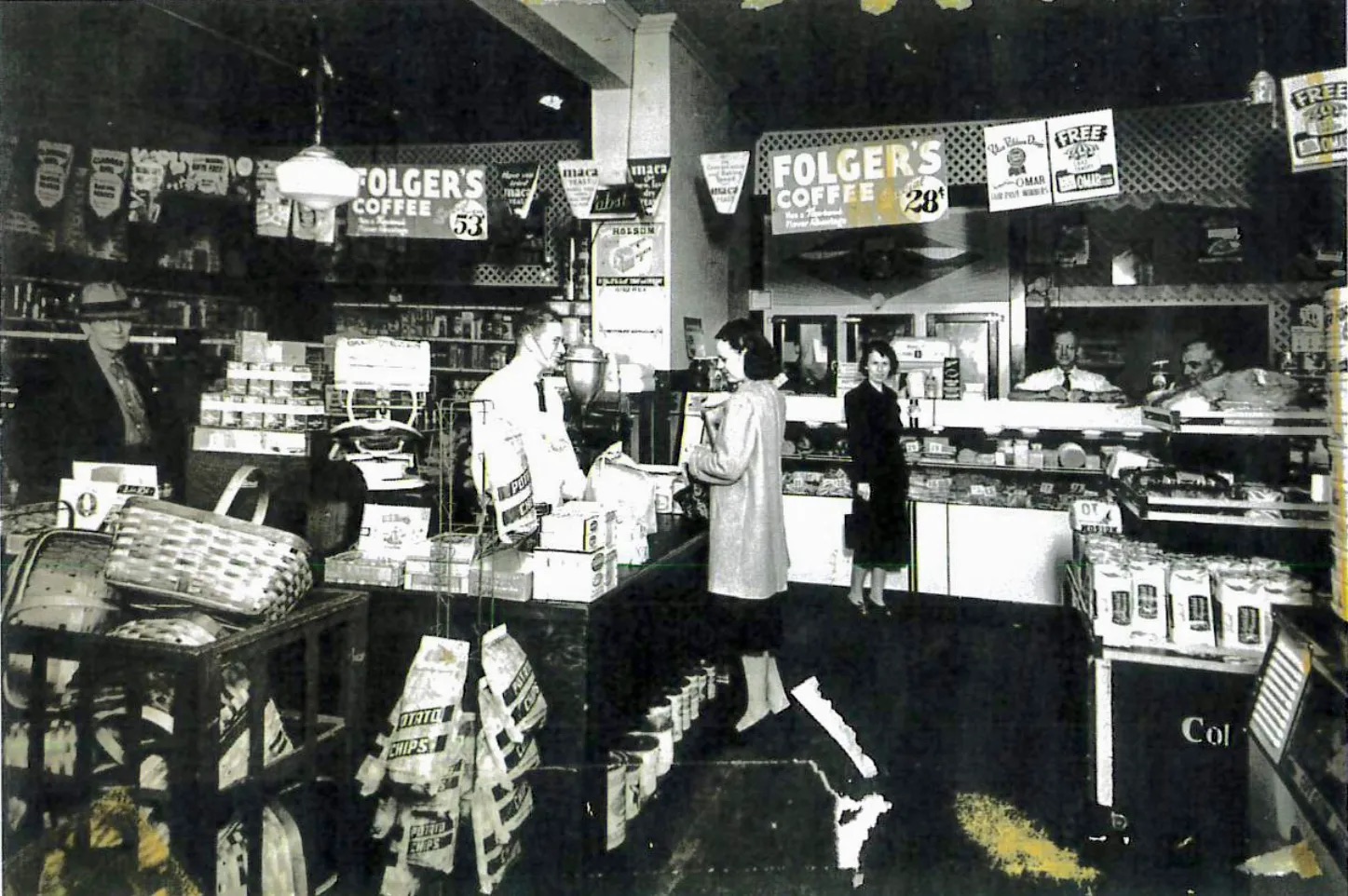
As the need for a dedicated farmers hotel declined (with hospitals relocating and other lodging options emerging), the upper levels transitioned into apartments, while ground-floor spaces served commercial tenants. Holub Grocery occupied the lower level in the 1930s. The building retained its role as a community fixture, informally recognized as a local landmark as early as 1900.
Mid-to-Late 20th Century: Pagliai’s, Laundromania, and Apartment Living
By the 1970s, the ground floor became home to the iconic Pagliai’s Pizza (operating since around 1969/1970s, evolving from Pizza Palace). This beloved pizzeria has been a Northside staple for generations.
NOTE: Laundromania and A & A Pagliai’s Pizza share space in the same room/area at the Bloomington Street location (316 E. Bloomington St.), a practical and enduring commercial pairing in the historic structure. Laundromania has operated here as a 24-hour coin-op facility with amenities like free Wi-Fi, adding everyday utility for residents and the community.
The upper levels continued as apartments, housing University of Iowa students, locals, and others—reflecting the Northside’s long role in providing convenient housing near downtown and campus.
Preservation Milestone (2023–2024)
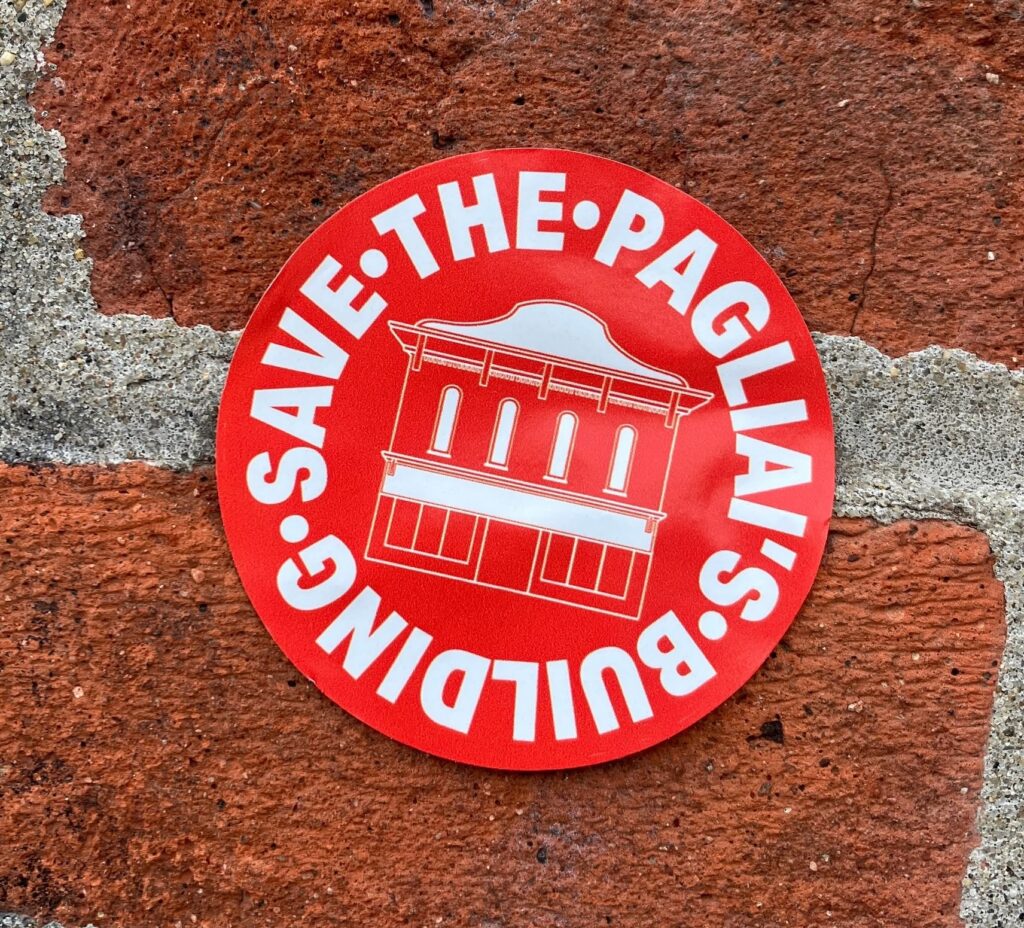
In late 2023, the property (still family-owned by Gary Skarda, a Slezak descendant) was listed for sale, raising concerns about potential demolition. A strong community effort—led by historians, preservation groups like Friends of Historic Preservation, the National Czech & Slovak Museum & Library, and local residents—resulted in landmark designation. On May 21, 2024, the Iowa City City Council voted 7-0 to designate the Slezak National Hall Complex a local historic landmark, protecting its architectural and cultural significance.
Present Day: New Ownership and Major Reconstruction
Today, the building and apartments are under new ownership by Brian Decoster and James Thibodeau. Major reconstruction and renovation are underway, modernizing the spaces while preserving the historic charm of this iconic Northside structure (often still referred to as the Pagliai building or Slezak-Holub-Skarda Building).
Renovations emphasize “vintage living” with modern comforts—creating updated apartments that respect the building’s Italianate features and layered history. As one of Iowa City’s oldest buildings, Holub Apartments offers a unique “step back into the past” in a highly walkable location near dining, entertainment, and residential charm. Owners are hands-on caretakers, proud of stewarding this landmark.
Why History Matters Here
Holub Apartments is more than housing—it’s a tangible link to:
- Immigrant resilience and Czech-Bohemian cultural contributions to Iowa.
- Community gathering spaces that fostered social bonds.
- Adaptive reuse across eras: hall → hotel → apartments + commerce.
- Local preservation victories, ensuring future generations can experience this piece of Iowa City’s story.
The reconstruction honors this past while preparing the building for continued vitality.
Sources & Further Reading:
- Our Iowa Heritage: Detailed Slezak National Hall history.
- Local news coverage of landmark efforts (Little Village, Homegrown Iowan, Friends of Historic Preservation).
- Iowa City Historic Preservation resources.
- Thank Iowa City